Flat of Tree Collection Vector: A Practical Guide for Designers and Creators
When you need to add a touch of nature to a website, a blog post, or a marketing campaign, the right visual elements can make all the difference. The Flat of Tree Collection Vector offers exactly that: a versatile set of minimalist tree illustrations designed to integrate seamlessly into modern projects. These flat green trees vector illustration sets are not just decorative; they are functional tools that help convey themes of growth, sustainability, and calm without cluttering your design space. However, simply downloading a file is often where the process goes wrong for many creators. Understanding how to properly utilize these assets ensures your final product looks professional rather than generic.
Understanding the Value of Minimalist Tree Illustrations
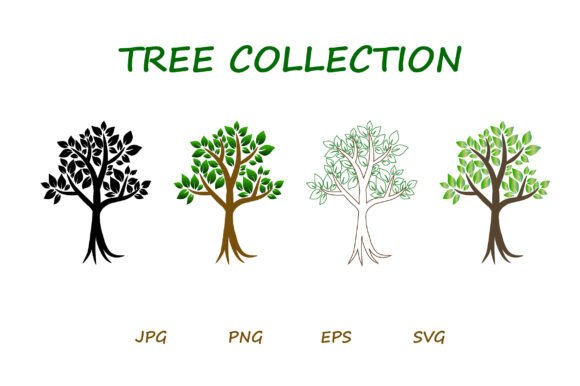
The appeal of the Flat of Tree Collection Vector lies in its simplicity. In an era where digital noise is overwhelming, minimalist designs stand out by stripping away unnecessary details. These high-quality files are engineered to be clean, crisp, and adaptable. Whether you are a freelance graphic designer working on a logo, a blogger adding context to an article about gardening, or a small business owner creating t-shirt designs, these vectors provide a solid foundation.
Unlike raster images that pixelate when enlarged, vector files remain sharp at any size. This scalability is crucial for versatility. You might use a single tree icon for a mobile app interface and then scale it up to cover a billboard or a large banner print. The included formats—JPG, EPS10, PNG, and SVG—ensure that you have the right file type for every stage of your workflow. JPGs work well for web previews, while EPS10 and SVG files are essential for professional editing and print production.
Common Pitfalls When Choosing Vector Assets
Despite the clear benefits, many users stumble during the selection and application phases. One of the most frequent mistakes is assuming that "vector" automatically means "perfect." While the Flat of Tree Collection Vector is high quality, using it incorrectly can still lead to poor results. A common error is treating these illustrations as static images rather than editable components. Many beginners download the PNG version and stop there, missing the opportunity to customize colors, shapes, or layer arrangements available in the EPS10 and SVG files.
This oversight limits creativity and can result in a design that feels disjointed from the rest of the brand identity. For example, if your brand uses a specific shade of forest green but the default vector uses a bright lime, simply placing the image over your background will look jarring. Without opening the editable source files, you cannot adjust the hue to match your palette, leading to a mismatch that undermines the professional look of your project.
Another misunderstanding involves file compatibility. Some users attempt to open EPS10 files in software that does not support them, resulting in errors or distorted graphics. It is vital to ensure your design software—such as Adobe Illustrator, Inkscape, or CorelDRAW—is capable of handling these vector formats before you commit to a purchase or download. If you are working strictly within a web environment, relying solely on SVG files is often the most efficient approach, whereas print designers should prioritize EPS10 for maximum fidelity.
The Impact of File Format Choices on Your Workflow
Choosing the wrong format can significantly affect your efficiency and the final quality of your output. If you are preparing materials for a large-scale print run, using a low-resolution JPG instead of the provided vector EPS file can lead to blurry edges and visible artifacts. This is a costly mistake that often requires reworking the entire design or reprinting materials, wasting both time and budget.
Conversely, using a heavy EPS file directly on a webpage without converting it to an optimized SVG or PNG can slow down page load times, negatively impacting user experience and search engine rankings. The Flat of Tree Collection Vector includes multiple formats specifically to address these scenarios. By understanding the strengths of each, you can streamline your workflow. Use SVG for responsive web graphics, PNG for transparent overlays in presentations, and EPS for high-end printing and detailed editing.
How to Avoid Quality Issues and Compatibility Errors
To get the most out of these resources, start by auditing your current project needs. Ask yourself: Is this for print or screen? Do I need to edit the individual branches and leaves, or is the whole shape sufficient? If you plan to modify the design, always begin with the EPS10 or SVG file. Open the file in your preferred vector editor and check the layers. Ensure that the paths are clean and that no hidden elements are interfering with your layout.
Before finalizing any design, perform a test export. Resize the element to 200% and 50% of its original size to verify that the lines remain smooth and the color fills stay consistent. This simple step catches scaling issues early. Additionally, if you are incorporating these trees into a larger composition, pay attention to the spacing and alignment. Minimalist designs rely heavily on negative space; overcrowding the trees can defeat the purpose of the flat style.
Evaluating Suitability for Different Projects
The Flat of Tree Collection Vector is incredibly versatile, but it is not a one-size-fits-all solution for every aesthetic. These illustrations excel in modern, clean, and eco-friendly contexts. They are perfect for logos related to environmental services, icons for navigation menus, or background elements for educational blogs. However, if your project requires hyper-realistic botanical accuracy or a vintage, hand-drawn texture, these flat vectors may feel too sterile.
For DIY crafts and t-shirt designs, the simplicity of the flat style is actually an advantage. Screen printers often prefer bold, clean lines without intricate gradients, making these vectors ideal for garment decoration. The openable and resizable nature of the files allows you to create unique patterns by repeating the tree motifs or combining them with other geometric shapes.
Entrepreneurs and marketers should also consider the emotional resonance of these images. Trees symbolize stability and growth, which can subtly influence how your audience perceives your brand. By integrating these elements thoughtfully, you can reinforce your message without needing heavy text. Just remember that consistency is key. Using a mix of flat vectors and realistic photos in the same design can create visual confusion. Stick to a cohesive style guide to maintain a polished appearance.
Final Checklist Before You Download and Create
Before you finalize your decision to use the Flat of Tree Collection Vector, take a moment to review your requirements against what the package offers. Confirm that the included file types match your software capabilities. Verify that the license terms allow for your intended use, whether that is personal blogging, commercial branding, or merchandise sales. Check the color profiles to ensure they align with your brand guidelines, and plan your editing process to maximize the potential of the vector layers.
By approaching these assets with a strategic mindset, you avoid the common traps of poor integration and technical incompatibility. These minimalist tree illustrations are powerful tools when used correctly. They offer a balance of aesthetic appeal and technical flexibility that can elevate your designs from amateur to professional. Whether you are building a new website, launching a product line, or simply enhancing a creative hobby, taking the time to understand and properly apply these vectors will yield superior results and save you from unnecessary revisions down the road.